Thursday, 9 May 2013

Style//Manifesto

 Looking at style and rules with style it's really interesting to see where we stand with rules for living and manifesto's. I was reading into Schiaparelli and she stood by her own rules, as have other art movements and some film groups.

  
1. Since most women do not know themselves, they should try to do so.
2. A woman who buys an expensive dress and changes it, often with disastrous result, is extravagent and foolish. 
3. Most women (and men) are colour-blind. They should ask for suggestions.
4. Remember 20 percent of womne have inferiority complexes, 70 perfect have illusions. 
5. Ninety percent are affraid of being conspicuous and of what people say. So they buy a grey suit. They should dare to be different. 
6. Women should listen and ask for competent criticism and advice.
7. They should choose their clothes alone or in the company of a man. 
8. They should never shop with another woman, who sometimes consciously and often unconsciously is apt to be jealous. 
9. She should buy little and only of the best or the cheapest.
10. Never fit a dress to a body, but train the body to fit a dress.
11. A woman should buy mostly in on place where she is known and respected and not rush around trying every new fad. 
12. And she should pay her bills. 

Personally I think this is a genius idea and I think we all need to learnt to form some ideas of rules to look at when thinking about style. Even if a lose basis to follow to stop us getting distracted by things in life. I think my personal manifesto for stylish living would be something similar to this. 

1. Be yourself at all times - Buy something for you and noone else. 
2. Don't follow trends - Trends are generally expensive things which will be out of fashion soon so they're not worth it, why pay to look like everyone else following a trend? 
3. Buy quality - Try to buy something that really stands out and something you'll have no regrets about buying. 
4. Find YOUR brand - Find brands you love and brands who design things that fit/look really good, they're people you can buy from without any worries/concerns. 
5. Comfort - If you feel awkward/uncomfortable it's not working and it won't look good, if you feel comfortable you'll pull it off. 
6. Don't be afraid - Don't worry about something not being conventional, you're not dressing for anyone but yourself.
7. NEVER throw clothes away - It's a waste to throw something away and it might work really well with something you buy in the future.
8. Don't buy because you 'feel' like it - Generally you're wasting money but you won't end up with anything you really like.
9. Colour embrace it - Pinks and yellows can really stand out and are brilliant, don't be scared of them.
10. Hunt for things - Charity shops are a gold mine, inexpensive clothing which is generally unworn/something a little different. 
11. Shoes are everything - Buy expensive shoes, don't ever risk ruining your feet and who doesn't love nice shoes?


Real Women//Plus Size

We live in an era where size seems to be everything. Being a size 6-8 is considered beautiful and anything else is ostracised but in all honesty the average size for British women is now a 12. How do we feel about this?

We'd all love to be this size and being a guy I guess its a little different, size is less of an image we feel the need to aim for. But rather than talking about how much of an issue size is I wanted to talk more about how much is actually on the market for women of plus sizes. Size 12 women make up almost  31% of the market, so they're no longer a niche market so should we aim to design for them more specifically?

With Stars such as Beth Ditto gracing the cover of LOVE in 2009 we also have to think about the idea that size is something which should be embraced rather than turned away from. If you have a client like Beth Ditto are you going to turn her away and tell her to get an outfit from somebody else, or are you going to try and suit her needs?


Talking about women and size a mention has to go to Mark Fast who grabbed headlines in 2010 by walking both 'normal' and size 12 models down the catwalk, firstly he had to go to a specialist agency to get the models. From other uni projects looking at the future of fashion and modeling lots of people said to me that they think the future of modelling is going to see a rise of more modelling agencies who deal with more 'specialist' modeling, including plus sized. 

My main gripe with just sending these models down a catwalk in size 12 is the clothes are still designed for a smaller silhouette, they're just in a bigger size. If you're going to use size as an issue and tackle it why not create something which is more flattering for the women wearing it. This is where I feel the issue stands with size and fashion. We have noone designer for bigger women and noone designing anything which will suit their body size better and also something which could cover areas they have more of an issue with. 

After a talk with David Sassoon at uni something he really made a point about was that he was designing for people who problems with parts of their body and it was his job to tackle these problems. He highlighted that actually not every outfit is going to fit any woman and its exactly the same for fashion which is designed for thin women. If the average size is a 12, why not design for it clearly a massive target market is being missed here. 


Take these designs from Elena Miro Fall 2012 for example, here you have someone designing for larger women but also taking size into account unlike Mark Fast who seemed to create a desgin for a smaller size and put it on a size 12. She's managed to do as I said and look at people's problem/insecurity areas and do something about them and still create something which I think is both beautiful yet stylish for the women. 

I think fashion designers and especially students really need to think about size as something that become a real issue and something which could easily be tackled and faced. Brands like Asos have brought out Asos Curve, they understand the market and thats probably the secret behind their success. We need to have less being just aiming for luxury brands and make people realise there is money in other areas of fashion too i.e. highstreet and aiming for a bigger market. 

Monday, 6 May 2013

Death of//Street Style

 I was reading an article from the Sunday Times about street style, is street style still a relevant source of inspiration?


Do we really think that street style is once what it was or has it really started to fall into a state of dull personalities who dress up more so for attention than a style choice. I think there are really two ways of looking at this argument you've got people who think that their style is just a part of them, an expression and you've got others who use style as a way to get attention especially at events such as fashion week. 

Personally I don't see any of this as a negative, I think that style is something which people should really play around with. I've recieved a fair few comments about my style sometimes describing it in a negative light and I wonder what people's issue is. People always seem to question certain aspects of the way I dress, mainly the fact I wear clothes which are bigger than they need to be. I really don't see what the problem with me wearing a large is if im a small - medium, I prefer the fit of a large it becomes a personal choice. 

The article had people describe people dressing up for fashion week and said that its something which should be ignored and it'll die down. I think being in the fashion industry there's going to be things you don't like and things you do, for example personally I tend to avoid the highstreet for various reasons. Does that mean you totally dismiss something because you don't like it?


Looking at both of these pictures from Facebook page 'Self Styled London' of Alexis Knox and Alis Pelleschi, here you've got a facebook page which focuses in on peoples individual style which I regard as something really interesting. Why not gather people and images of really vibrant style? I think style is a huge scale you have so many different people at different parts of the market, people who buy luxury brands and people who buy fast fashion. What I think is more interesting is how they choose to actually wear the pieces, what they put them with and how it ends up as a final result. 

I think thats why to me street style really is inspirational, I don't think its dead at all. To me street style is a really interesting and good way to see how trends are being worn, looking for new trends and styles. It's a way for designers to see whats popular and trying to move towards what the market wants. 


Thursday, 2 May 2013

What Makes//Something Cool

Love, Trust and Authenticity. 

These three words are what apparently 'makes something cool', what is it about something we really link to this appeal. 

//LOVE//
Love, the whole point of buying fashion. We love something, we need it, we crave it so I guess we love it? Or do we? Do we honestly love fashion/pieces/brands, I know personally a brand I 'love' are Doc Martens. I think their designs are stylish yet simplistic, their British heritage is and also the quality are just a few of the reasons I love them. I think the love I have here would be what I consider the love aspect to making an item cool, it's all about really finding something you really connect with. 

//TRUST//
Trust, I really think you've got to buy something you're really beliving in and it goes hand in hand with love, both being a vaulable asset for a brand. If your customer trusts you they'll return to you, constantly feeling comfortable for what you're bringing out. You've got to find a brand who you think know their branding and stay true to their image, rather than finding a brand who are constantly changing. Also you trust a brand when you know their product will deliver what you desire.

//AUTHENTICITY//
Authenticity again is a lot like trust, for you it has to be real. You don't want a fake or some rip off you want originality. It's like buying a designer bag, you're not gonna want to pay out for something that is just a cheap rip off which will eventually fall apart on you, you want the quality and knowing its come from the designer.

I think we really need to question these things when it comes to fashion, its a really interesting way of looking at why a customer would desire a product, aim for these things and you fulfil their desire. It's something really important to consider when looking at an advert/campaign/promotion. 

Tuesday, 30 April 2013

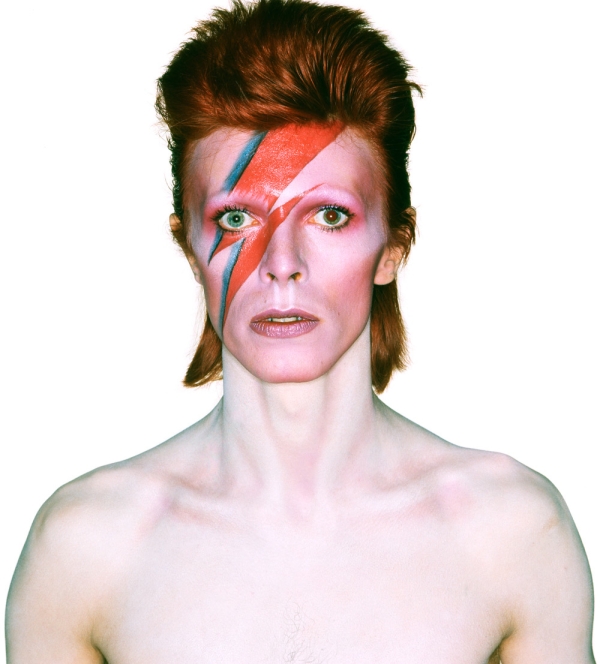
V+A//DavidBowieIs

As part of my uni work we're looking at doing a Bowie themed photoshoot, looking at more his Ziggy Stardust persona so for some inspiration I decided to check out the Victoria and Albert's David Bowie Is exhibition. 


Sponsered by Gucci I was really expecting a lot and honestly it really delivered, it had so much information about him, pictures and videos with the addition of music and sound by Sennheiser - which was a lovely touch. 

Going as a research visit really was so much different to just attending normally, I wanted to look at designers and really focus in on the fashion side of his persona. One thing I noticed was the amount of times he actually had worked with and wore Kansai Yamamoto, especially during the person and time period I wanted to learn more about 

I really thing Kansai Yamamoto's designers are one of the major reference points from the Ziggy Stardust persona, alongside the make up he wore and the signature hair. I think that both of these things together really helped him create characters. 

One of the major phrases I remembered was him saying he could either be himself or lots of characters and for him it was easier to do characters. I think this is another reason Bowie is such an important musical, style and famous icon he really did consider himself as someone playing characters.


Also it was really interesting to help gather a real feel of David Bowie's past, looking at how he was where he came from and looking at how he's grown as a musician and artist. It was interesting to see all the various different reference points which also went alongside his work it really gave an insight into his mind. 

With looking at his costumes I really think that David Bowie has a fascination with shape, looking at different shapes playing around with his body. Looking at his silhouette and changing it morphing into something else. I also love how he has such an influence and is a part of the design especially, I thought he'd be more someone who just allowed pieces to be created for him.


Sunday, 28 April 2013

Southbank//Light Show

So I'd been meaning to check out the Southbank Hayward Gallery Light Show and I knew it was popular because previously being told it'd be sold out for the day. I thought if I went I'd be able to book in advance, turning up only to be told there was no more advance tickets. I thought I'm never going to see this until a lovely man offered me a ticket for free because he had a spare student one!

I think living in London really makes you realise how kind people can be especially in situations like this! Anyway I have to say that it was one of the best exhibitions I think I've seen in a while, there was so many pieces I loved. My top five had to be:

Carlos Cruz-Diez // Chromosaturation 
 

Olafur Eliasson // Model for a Timeless Garden

Jenny Holzer // MONUMENT

Conrad Shawcross // Slow Arc Inside a Cube IV

Leo Villareal // Cylinder II


I think this is probably the best order for them all...I think, there's probably a joint first for Chromosaturation and Model for a Timeless Garden. Honestly though it was incredible, I don't think a piece of work has ever made me smile and be as amazed as Chromosaturation, I don't think i've sat and observed a piece as long as MONUMENT well that and Blue Purple Tilt but thats another Holtzer so its all the same, her work just draws me in. 

Model for a Timeless Garden is another piece I literally could have fell in love with, stayed for hours and just sat and watched and walked around. Both that and Chromosaturation in all honesty, I'd love a room like that just to feel emotion and have your senses confused and played with.

It really was a nice little surprise thanks to the kindness of strangers, to be able to go and see all of this and really experience it all first hand. One thing I've really wanted to do more of is go to more galleries and see more exhibitions, this highlighting why I love doing it!

Disposable//Models

Looking more into the rich list I decided to compare the current with the 2006 rich list and to my surprise something really interesting did come to my attention. In 2006 there was nine different models in The Fashion Millionaires list yet in 2013 there isn't any. 

Have we grown tired of Supermodels such as Elle Macpherson, Kate Moss, Naomi Campbell and Lily Cole?


Where do we stand with models as of this moment in time, personally I think we've almost turned modelling into a trend. For a while someone is huge and then they're dropped for the next star disposed of as if they were never even heard of. Personally I think it's the fashion industry trying to appeal to who ever has grabbed youths attention. 

We've seen it before Agyness Deyn, Charlotte Free and Cara Delevingne currently, for a moment they're huge you see them used by everyone. Youth go mad for them post about them idolise them and then drop them when the next person comes along. 


What is it about these models that makes them so easily dropped, is it that they have their quirk thats so new and fresh, we love it to the point of ruin and exhaustion. Have we created the disposable model ourselves by making having a fashion industry who will so easily play to our needs and desires. 

Also this isn't an insult to their modelling either its more so looking at their careers and longevity.  Models are no longer becoming such household names rather than flashes and fads we're eventually glad to see the back of. Has modelling become over saturated with talent and personalities and this is why we no longer hold onto our 'supermodels' and have the supermodels actually died out.

Is this the death of the supermodel and the birth of the disposable model?